
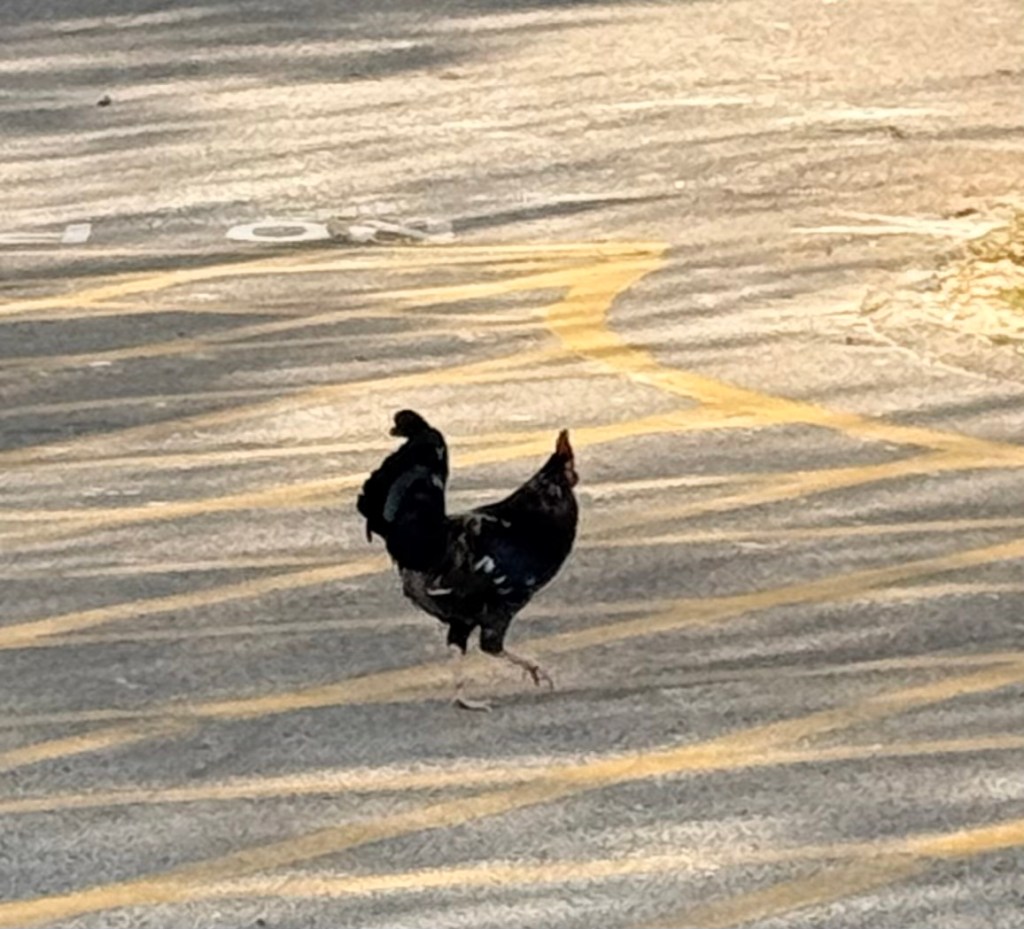
Yep, that’s me. A grown man afraid of chickens. I’m afraid of most birds. I’m ok with eagles and owls, I think it’s because I can predict their movements, but others, pigeons, and yes chickens really lead to a lot of fear. It’s a phobia I’ve had since I was a child. Over the years I’ve learned to pre-empt movements to take back some control. More on that later.
There is a quiet moment that happens in many situations of harm. Someone hears a degrading comment in a meeting. A group of young men begin intimidating someone in public. A colleague notices controlling behaviour between partners. People see it. People feel something isn’t right. Yet nothing happens. Later, many describe the same internal experience. They froze. Their mind went blank. They didn’t know what to say. By the time they gathered their thoughts, the moment had passed. Harm has taken place and will likely happen again.
For years this silence has often been explained in moral terms, apathy, cowardice, indifference. But neuroscience tells a far more interesting story. Much of the time the problem is not a lack of values. It is the way the human brain responds to perceived threat. A basic understanding of that response is essential if we want to build cultures where people are willing and able to step in when harm occurs.
At the centre of this process sits a small almond-shaped structure in the brain called the Amygdala. Its job is ancient and essential: detect danger and prepare the body to respond. When the amygdala senses a potential threat, it triggers a rapid cascade of physiological reactions. Heart rate increases. Stress hormones are released. Attention narrows. The brain shifts into survival mode.
In his book ‘Emotional Intelligence’ (1995) Psychologist Daniel Goleman popularised the term Amygdala Hijack to describe what happens when this emotional alarm system overwhelms the brain’s reasoning centre. In those moments, the slower and more rational part of the brain, the Prefrontal Cortex, temporarily loses control. The emotional brain takes the steering wheel.
From an evolutionary perspective this makes perfect sense. Our ancestors survived because their brains reacted quickly to danger. If something looked risky, hesitation could mean death. But the modern world presents a different kind of threat landscape. The dangers we encounter are often social rather than physical. Challenging a colleague’s behaviour. Interrupting a friend’s sexist remark. Confronting someone acting aggressively in public.
In these moments the brain can interpret social conflict as a threat. The amygdala sounds the alarm, and the body prepares for three classic responses: fight, flight or freeze. For bystanders, freeze is common. People look away. They stay silent. They wait for someone else to act.
The fascinating part is that many witnesses care deeply about what they have seen. The silence is not always indifference. It is often the brain’s alarm system overwhelming the capacity to think clearly in the moment. I often refer to the murder of George Floyd on the streets of Minneapolis in 2020. The three police officers with Derek Chauvin, two of whom were ‘rookie’ officers were faced with an extremely stressful event. The death in 2015 of Allan Marshall in Saughton Prison, Edinburgh involved numerous officers who were either restraining Allan or watching the unfolding events. The stress of the moment in both events would have been a factor in why officers and staff failed to intervene.
Simply put in moments of high stress the human brain is less intelligent. This is where active bystandership training becomes so important. At its core, this type of training is not simply about encouraging people to be brave. It is about preparing the brain for situations that might otherwise trigger paralysis.
One of the most powerful tools in bystander training is the use of mental rehearsal. Participants explore real-life scenarios where harm may occur and practise possible responses. These rehearsals help create what psychologists call implementation intentions, pre-planned actions linked to specific situations.
In simple terms, people decide in advance what they might do.
“If someone is mocked in a meeting, I will interrupt the conversation.”
“If a friend speaks disrespectfully about women, I will challenge the language.”
“If someone looks uncomfortable in a social situation, I will check in with them.”
These mental scripts act like cognitive shortcuts. When a similar situation arises in real life, the brain doesn’t need to invent a response from scratch. It can retrieve a pre-existing plan. That small difference matters enormously in a moment of stress. US Psychologist Dr Phillip Zimbardo coined the term the ‘Heroic Imagination’ suggesting that when we rehearse specific responses to harmful moments that are observed we become better ready to respond in real time.
When the amygdala fires its alarm, the brain prefers simple, familiar actions. A rehearsed response can surface quickly enough for the rational brain to regain influence before the opportunity to intervene disappears.
Another important aspect of bystander training is exposure. When people discuss and practise responding to challenging situations in a safe environment, the brain gradually becomes less reactive to those scenarios. Neuroscience research shows that repeated exposure can reduce the intensity of amygdala activation. Situations that once felt threatening begin to feel manageable. Confidence grows through familiarity.
The training also expands people’s understanding of what intervention looks like. Many individuals imagine stepping in as something dramatic or confrontational. They picture arguments, public conflict or personal risk. Active bystandership reframes intervention as a spectrum of small, practical actions. Sometimes intervention might involve redirecting a conversation or asking a curious question. In other situations, it could mean checking in privately with someone who has been targeted, creating a distraction to defuse tension, or reporting behaviour through appropriate channels.
When people realise that intervention does not require heroics, the perceived threat level drops. Lower threat means a quieter amygdala and greater capacity to act.
Another critical factor involves social norms. Human beings are deeply influenced by the behaviour of those around them. In many environments, silence becomes the default response simply because people assume others expect it. Bystander training helps change that expectation.
When organisations openly discuss the responsibility to intervene, they send a powerful social signal. People begin to understand that stepping in is not a personal risk but a shared cultural value. In turn the brain interprets the situation differently. Instead of feeling isolated, individuals feel supported by a wider community standard. This shift in perception reduces the social fear that often accompanies intervention.
Over time, something even more interesting begins to happen. Supportive behaviour becomes contagious. When one person speaks up, others see that action is possible. Witnessing intervention provides a kind of social proof that challenging harmful behaviour is acceptable. Confidence spreads through observation.
Eventually, intervention can become almost automatic. Just as athletes train their bodies to react instinctively under pressure, bystander training helps people build behavioural habits that activate quickly when situations arise. In occupations like policing, firearms, first aid and officer safety training is an example of training preparing officers to respond when under stress.
The amygdala will always react to perceived threat. That is part of being human. But training helps the rest of the brain stay in the game.
The prefrontal cortex regains control more quickly. People recognise the situation, access a rehearsed response, and act before fear has the chance to shut them down completely.
Another important addition that I’ve added to my active bystandership training is to talk directly about the brain. A simple discussion on the amygdala hijack not only helps, but it also provides me an opportunity to talk about my bird phobia and how I’ve learned to deal with it.
First, it’s vital we are all aware of our responses when under stress. Mother nature in many ways provides you with an alarm bell. That increased heartrate, the tunnel vision and rise in body temperature is the start of the process. The brain is being starved of much needed oxygen. The arms and legs are being readied for the fight or flight. By the way you can’t stop the hijack, but spotting the signs prepares you to quickly overcome it. OK back to my bird phobia.
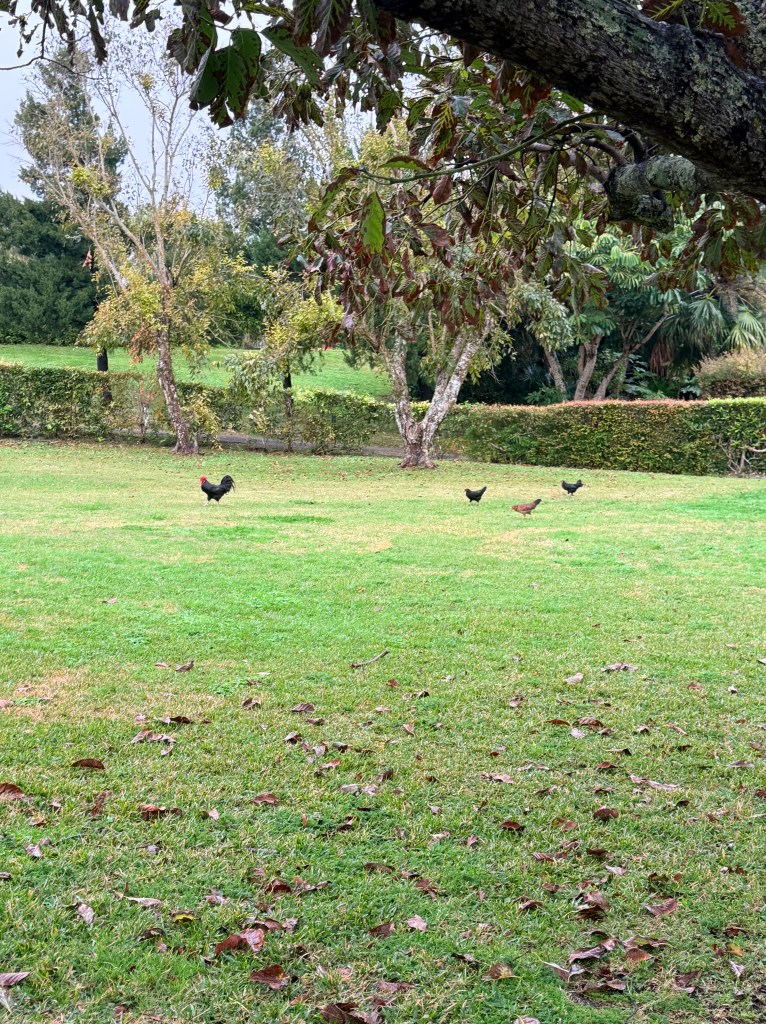
Whilst in Bermuda, every morning before training delivery I would go on a 5–6-mile run. I found a disused railway line which catered well for my run. In Bermuda there are chickens everywhere. Running along the line I found myself scanning ahead for threat. The knowledge of the high likelihood of me meeting my nemesis, prepares me. I’m also aware that as I approach the chicken it will be able to escape to the side of the track. The challenge for me was found in one part the track which passed through a long section with high walls. I know chickens can’t fly that well, so I become particularly stressed. I’m assuming you are laughing out loud just now, my groups were when I used this story to back up the learning. My only response is to stop running, head to one side of the track and slowly walk past the chicken. I’ve learned to become very selfish in these moments. The selfishness is me trying to stay present and in control.
In all my work I talk about the brain under stress. I urge people never to react immediately to an event. My message is simple, notice the stress reaction in your body, stay focused and take some deep breaths. Two or three good deep breaths helps to get the oxygen back to the brain. Your brain gets back to its critical state, and you are then able to make better decisions that will likely lead to a better outcome both for you and others.
This is why active bystandership is such a powerful tool in addressing issues like workplace bullying, domestic abuse, harassment and community violence. It does not rely on the unrealistic expectation that people will suddenly become fearless. Instead, it accepts a simple truth about human nature: the brain needs preparation.
When individuals understand their own neurological responses and practise supportive actions ahead of time, the moment of witnessing harm begins to look different. The internal alarm may still ring, but the brain now knows what to do next.
And in those crucial seconds between noticing harm and deciding whether to act, preparation can transform hesitation into support. One option for a bystander is to delay intervention. This isn’t cowardice, for a trained individual, its strategy
In the end, building cultures of active bystandership is not only about courage. It is about equipping the human brain with the tools it needs to turn concern into action.
 grahamgoulden.com
Great read. Though I have to say, the fact that you’re afraid of chickens is even more interesting.
LikeLike