
Some of you reading this may have read a previous blog I wrote about the drama ‘Tip Toe.’ Starring Alan Cumming and David Morrissey, the drama presented a range of messages which I feel were missed by many who focused on the violent act that we saw in the first minutes of the first episode. What untangled in the subsequent episodes portrayed a range of issues which I unpicked in the blog. Tip Toe was a lesson, a lesson for us all.
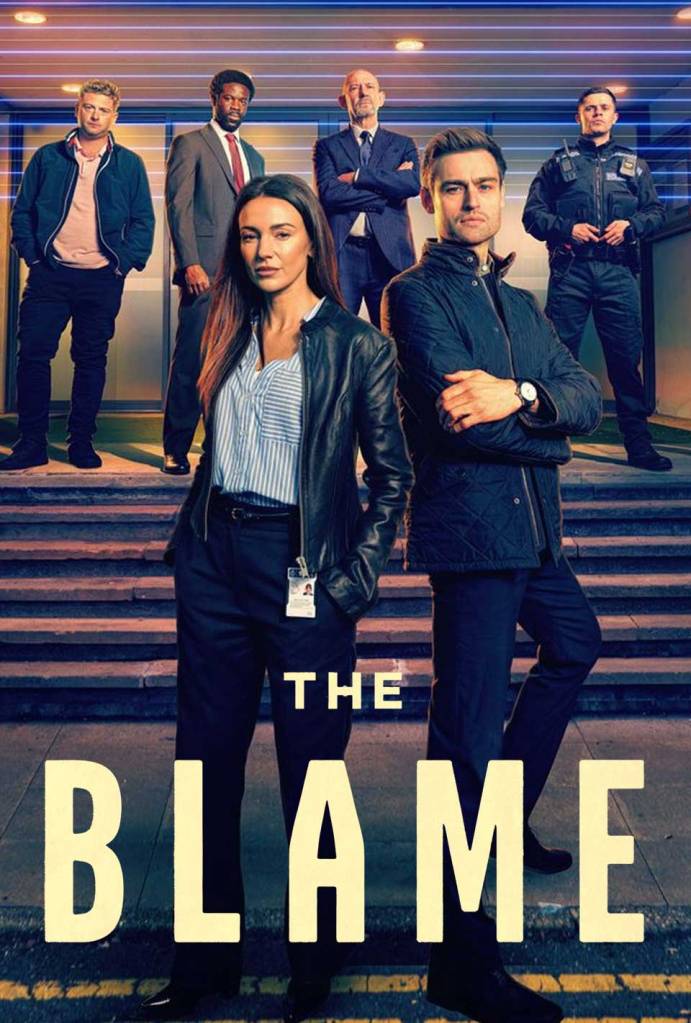
I’ve just finished watching ITV’s The Blame. Another very powerful drama which I feel for many would have simply led to conversations about police behaviour. Since the murder of Sarah Everard in 2020 by a serving UK police officer, viewers would be forgiven for focusing entirely on the police misconduct which was shown throughout. I suspect many police officers would be watching and thinking, “Here we go again, another kicking for the profession.”
As someone who works internationally helping policing organisations to look at their internal cultures, I want to start this blog with a recognition that the behaviours observed, do not apply to the vast majority of officers and staff who I feel join policing to help people and to make a difference. Some of you will read my words and ask, “Where have you been these last years?” I agree that the numerous media stories since the horrible murder of Sarah make uncomfortable reading, and I do not dismiss these incidents. For me, The Blame was a focus on Police culture and how it contributes to the following.
- The evolution of the harm that was observed.
- The increased power of those who are in either formal or informal hierarchical roles.
- The silence from many others around both victims and harm-doers
- The acquiescence and the joining in of the behaviours by team members
- The isolation of officers who refuse to conform to the behaviour or who speak up.
- The presence of a toxic and unsafe culture which benefits no one.
Policing continues to address symptoms whilst failing to recognise the power of their culture to contribute to harm we saw in The Blame and its links to the points above.
In recent years, I’ve always asked one question when working with police officers. Whether in the UK or internationally, my question is simple. Do we really know who we work with?
The Blame: What Does It Tell Us About Police Culture?
ITV’s The Blame brings police culture into our living rooms. For many viewers, the focus will understandably be on the behaviours portrayed in the drama: the decisions made, the misconduct, the relationships and, ultimately, the harm. Extreme behaviours grab our attention, but they can also distract us from the conditions that allowed them to develop. Behaviours are often symptoms of something deeper and culture can be one of those deeper causes.
When something goes badly wrong, our instinct is often to ask: Who is to blame? But perhaps we should also ask: What was happening around them?
Who knew?
Who noticed?
Who was uncomfortable?
Who considered saying something?
Who didn’t?
And perhaps most importantly: What was it about the culture that made earlier action difficult?
Culture can become a barrier to action
One of the most important lessons from The Blame is that harmful behaviour doesn’t necessarily appear suddenly. There can be a series of moments beforehand.
A comment.
A joke.
A boundary crossed.
A colleague behaving differently.
Something that doesn’t quite feel right.
These are opportunities for intervention. Yet people don’t always act. That’s where culture becomes important. We often talk about the barriers to active bystandership as if they exist solely within the individual: fear, uncertainty, lack of confidence or not knowing what to say. But sometimes the biggest barrier is the culture around. them. What happens if you challenge a colleague? Will you be seen as disloyal? Will people ask why you are making an issue of it? Will you become the problem?
Will it affect your relationships?
Your reputation?
Your career?
hat happens when the person displaying the behaviour is popular, influential or senior? These questions matter because people don’t make decisions in isolation. They look around. They watch what others do. They assess the social consequences and if the perceived cost of speaking up is greater than the perceived benefit, silence can become the rational choice.
The Danger Of Distance
Psychologist Philip Zimbardo’s work highlighted the powerful influence that environments, roles, authority and social situations can have on behaviour. One lesson from his work that remains relevant is that we shouldn’t look only at the individual. We should examine the environment in which behaviour occurs.
Leadership is part of that environment. A leader doesn’t have to actively support poor behaviour for a poor culture to develop. Sometimes distance is enough.
If leaders aren’t close enough to understand what is really happening within teams, an informal culture can develop beneath the formal one. The organisation may have excellent policies. It may have values displayed on walls. It may have extensive training but the real culture is revealed in what happens when nobody senior is watching and The Blame gives us a dramatic representation of precisely this challenge.
There’s Always Someone Listening
“It’s a fucking joke”. The response to an officer in the drama who asked why officers were using derogatory language. In tight-knit teams and peer groups, a typical response to intervention is what I call the ‘shoot the messenger response’. It’s a failure to even recognise that harm is taking place. It puts the blame back on the person intervening.
Such responses make it really difficult for people to speak out. Such responses also provide some others with power and permission. The title of this blog is a question, and I ask it in all of my trainings simply because it needs to be asked.
“I’m information gathering; I just watch” is probably one of the most powerful lines in the drama. The presence of people in our workplace who commit extreme harm is something we never want to believe. Wayne Couzins and David Carrick are two real-life examples. Were they sitting and watching?
Earlier Action Matters
The answer isn’t simply to become better at dealing with serious misconduct once it has happened. I talked recently with a police officer who highlighted one particular UK Chief Constable who was happy that he had sacked the most officers. Sacking officers doesn’t build trust in the profession; preventing harm does.
We need to become better at preventing the progression towards it and that means creating cultures where early intervention is normal. Where a colleague can say: “Are you OK?” “That’s not like you.” “I’m not comfortable with that.” “Do you want to talk about what just happened?” These don’t have to be confrontational conversations. In fact, the earlier we intervene, the less confrontational intervention often needs to be.
This is why I see active bystandership as much more than training people to intervene in dramatic situations. It is about giving people permission, confidence and practical tools to influence the culture around them.
Leaders create leaders
Police leaders cannot be everywhere. They cannot hear every conversation or see every interaction. So creating a healthy police culture cannot be the responsibility of senior leaders alone. Leaders need to create leaders. Every rank has a role in shaping the environment in which colleagues work. Every officer has some influence over what becomes normal and every intervention, however small, sends a message about what this organisation values.
The Blame therefore allows us to look beyond the behaviour portrayed on screen.
Not simply to ask, “Who is to blame?” But to ask: “What was the culture telling people about speaking up?” and perhaps the most important question of all: “What could someone have done earlier?”
The best cultures aren’t those that are simply good at responding when things go badly wrong. They are cultures where people feel able and expected to act before they do.

