
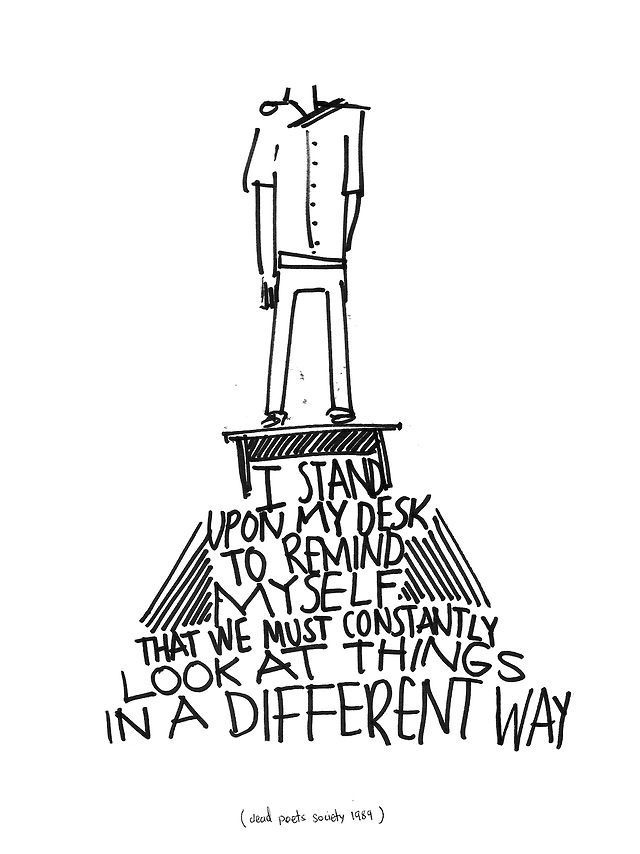
The quote above is from the wonderful film “Dead Poets Society”. I’ve used this quote for sometime now as a way to force me to think and act differently. I use it here to ask you to think differently about how you think about your workplace culture and what is needed to build a culture you can be proud of.
Here goes……
Have you noticed how often organisations attempt to address workplace culture by focusing almost exclusively on those at the frontline?
A problem emerges. Perhaps it’s bullying, harassment, inappropriate behaviour, poor decision-making or poor wellbeing. The organisation responds by commissioning training, introducing new policies, running awareness sessions and telling employees what they need to do differently. And who usually gets the training? The people at the bottom of the organisational hierarchy.
To be clear I do think that culture is something to be co-created as opposed to simply a leadership responsibility however I also think this is one of the fundamental weaknesses in how organisations approach culture change. It’s just too easy to focus on such people.
We’ve all been there haven’t we? At the start of a training a senior leader pops in, says a few words then leaves.
You cannot expect people at the bottom of an organisation to create a culture that the people at the top are unwilling or unable to demonstrate. By the way the ‘provision of training’ isn’t what makes culture.
This isn’t an argument against frontline training. Far from it. My work on active bystandership is fundamentally about equipping ordinary people with the confidence, skills and permission to intervene when they see something wrong. But training alone will never be enough. If we genuinely want to change culture, we need to think differently about where we start, who we involve and how we sustain that change.
For me, that means starting at the top.
Leaders create the conditions for behaviour
Culture isn’t simply what people do. It’s also about what they see, what they experience, what they believe is expected of them and, importantly, what they believe they can get away with.
Senior leaders have enormous influence over these conditions. They shape priorities, allocate resources, determine accountability and influence the behaviours that are rewarded, tolerated or challenged. Consider some simple examples.
- An organisation talks about respect but tolerates disrespect from high-performing individuals.
- It encourages people to speak up but reacts defensively when someone challenges a senior decision.
- It promotes psychological safety but punishes people who make mistakes.
- It talks about looking after colleagues but rewards individual performance at the expense of collective wellbeing.
Employees notice these contradictions. In fact, they are often much more influenced by what leaders do than by what leaders say. You cannot train your way out of contradictory leadership behaviours.
If leaders want different behaviours from their employees, they must first be prepared to examine their own.
Culture cannot be delegated
Another mistake organisations make is treating culture as something owned by HR, learning and development or frontline managers.
These departments have important roles, but culture belongs to the whole organisation.
Whilst leaders can instil responsibility on staff to be part of culture creation they cannot outsource culture change to a training programme or delegate responsibility to someone else. They must be visible, involved and accountable.
That means being prepared to ask difficult questions about their own leadership practices, the decisions they make and the behaviours they tolerate. Sometimes the most important question isn’t whether employees understand the organisation’s values. It’s whether employees see those values being lived by the people who lead them.
This is particularly important when considering the relationship between power, hierarchy and behaviour. If an organisation wants employees to challenge inappropriate conduct, it must demonstrate that status and seniority do not provide immunity from challenge.
Frontline employees need permission, not just skills
This is where my work on active bystandership becomes particularly relevant. We can equip people with the skills to challenge inappropriate behaviour, intervene when colleagues are struggling or speak up when something doesn’t feel right.
But what happens when the person behaving inappropriately is senior to them?
What happens when they need to challenge a high performer, a popular colleague or someone with considerable organisational influence?
What happens when previous attempts to speak up have been ignored?
These are not simply questions about individual courage. They are questions about organisational culture.
We often focus on giving people the tools to intervene without sufficiently addressing the conditions that make intervention difficult.
Fear, hierarchy, uncertainty, lack of support and concerns about the consequences can all prevent people from acting.
People need to know that they have permission to intervene, that they will be supported and that leadership will not abandon them when things become uncomfortable.
That permission has to come from the top.
Why top-down and ground-up matters
This is why I advocate a combined approach. A top-down approach establishes the expectations, demonstrates commitment and creates the conditions in which people can act. A ground-up approach ensures those expectations become everyday practice. It also suggests that culture is something that can be created together. Both are essential.
Senior leaders need to provide direction, role modelling, accountability, resources and visible support. They need to demonstrate that speaking up, challenging behaviour and looking out for colleagues are not simply things written in organisational policies.
Meanwhile, employees need to take responsibility for the environments they inhabit. They need to recognise that culture is shaped by everyday interactions, conversations and decisions.
It is the colleague who challenges an inappropriate joke, the friend who notices someone struggling, the team member who questions an unsafe decision and the manager who supports someone who has spoken up.
These seemingly small moments accumulate. But there is something else worth recognising. Ground-up culture change should also influence what happens at the top. Employees need opportunities to provide honest feedback, challenge established thinking and tell leaders what is really happening.
Culture change should not be a one-way communication exercise. Leaders need to listen as well as direct.
For me the best cultures are those where leadership creates the conditions for employees to take responsibility, and employees feel sufficiently empowered to influence leadership.
Leaders must be prepared to be challenged
There is one final point I think deserves particular attention. Active bystandership isn’t just about giving employees the confidence to intervene when they see colleagues behaving badly. It is also about creating leaders who are approachable, coachable and willing to accept intervention themselves.
We need leaders who can hear uncomfortable feedback without becoming defensive. Leaders who understand that being challenged is not necessarily an attack on their authority. Leaders who recognise that sometimes the most valuable intervention comes from someone much further down the organisational hierarchy. This requires a different understanding of leadership.
Being a leader doesn’t mean having all the answers. It means creating an environment where people feel able to raise questions, challenge decisions and help each other get things right. I often talk about leaders being architects of culture. But perhaps we should also think of them as culture maintainers.
Just like a vine in a vineyard, culture requires constant attention. It can deteriorate when harmful behaviours go unchallenged, when people become disengaged or when leaders stop listening.
It needs to be maintained through everyday actions.
Where does your organisation start?
When I work with organisations, I want to start at the top. Not because senior leaders are necessarily the problem, but because they have the greatest capacity to influence the conditions in which everyone else works.
I want them to understand culture, their influence on it and their responsibility for maintaining it. Then I want to work throughout the organisation, equipping people with the confidence, skills and permission to take responsibility for the environments they inhabit.
I don’t want leadership development happening in isolation from frontline training. Nor do I want frontline employees being told to change their behaviour without seeing any commitment from those who lead them. We cannot ask employees to be brave in environments where leaders have not made it safe to be brave.
Equally, we cannot expect leaders to change culture simply by telling others to behave differently. Culture change happens when leadership commitment and everyday employee behaviour reinforce one another.
That’s why I start at the top. But I certainly don’t finish there.
Because ultimately, culture is everyone’s business.

