
The image is difficult to look at. Three young men walk away from a scene where another young man, Kayden Moy, has been fatally stabbed. It is an image that captures something almost impossible to comprehend. The violence has already happened, yet life appears to continue as if nothing has changed. It is chilling. The words in the caption simply focus on the perpetrators.
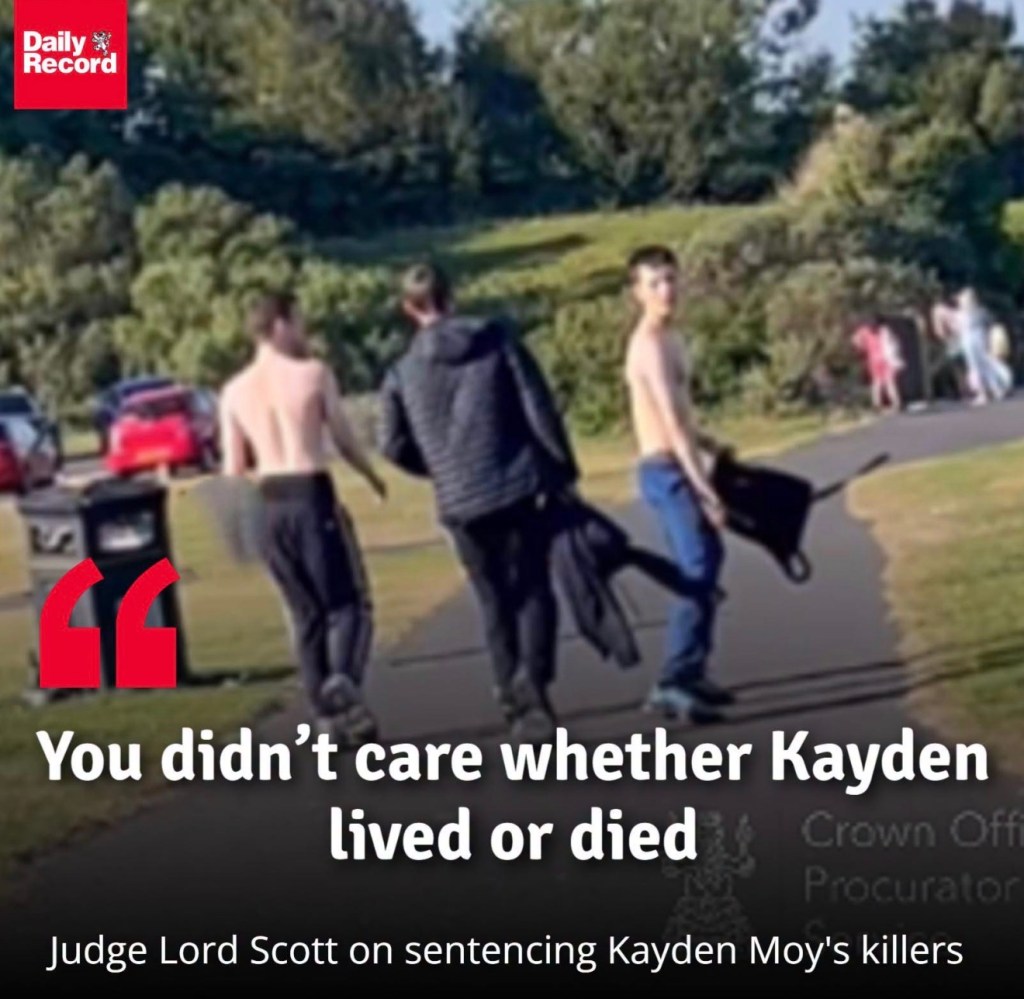
When tragedies like this occur, society is rightly consumed by the question of who. Who carried the knife? Who struck the fatal blows? Who should be held accountable? Our justice system must answer those questions, and it has. But once the trial ends and the sentences are handed down, another question deserves equal attention. Why?
Not because asking why excuses murder. It does not. Accountability and understanding are not opposites. They are partners. If we never understand why young people become capable of such violence, we leave the conditions that created it untouched. The uncomfortable truth is that no one wakes up one morning and suddenly becomes capable of killing another human being. Violence is often the end of a much longer story.
What happened long before that fatal day?
What attitudes towards violence were normalised?
What messages about masculinity, status or respect had these young men absorbed?
Who laughed when cruelty first appeared?
Who stayed silent when early warning signs emerged?
These are difficult questions because they invite us to look beyond the individuals and towards the environments that shaped them. Environments that we are part of. Every one of the moments above offered an opportunity for someone to walk away from an escalating situation or to intervene to stop the escalation. But they didn’t. Again why?
There’s often a troubling moment for many young men in these moments. Many will see the potential for violence but a fear creeps in.
A fear of being called anything less than tough by a mate.
A fear of their sexuality being questioned.
A fear of losing a friend.
The sad reality is that many young men in these moments fail to recognise that they are not alone in that other friends will see the harm also and also do nothing. Whilst we must focus on causes of violence we must also focus on factors that contribute to the violence. We can’t really address one without addressing the other.
The biggest influence on a young man is one of their friends. This is where I feel more focus is needed. Awareness on knives, social media whilst important is nowhere near enough. As someone who spends a lot of time talking on this subject, I don’t see the friendship conversations taking place with young people enough.
This is where active bystandership conversations become so important. In these sessions we don’t speak to young men as the attacker. We speak to them as friends with the power to stop a murder. A few years ago, i spoke to an older man on this topic. After the session he said to me “If my mate had stopped me, I wouldn’t be here for the next 25 years”. This man was in a Scottish prison having committed murder.
In such conversations we can raise awareness on violence, but we will also –
Correct misperceptions that exist in friendship groups.
Reduce the fear I describe above.
Create a sense of permission amongst friends to look out for friends.
Suggest that stopping a friend from committing violence is truly an act of loyalty.
When we reduce fear, we create opportunities to prevent violence. Surely that’s the aim.
As a society, we are remarkably good at expressing outrage after a tragedy. We hold vigils. We demand tougher sentences. We promise that something must change.
Yet we are far less willing to confront the quieter behaviours that make violence more likely. We often dismiss them because they appear insignificant in isolation. They are not.
Every culture teaches its members what is acceptable. Every friendship group establishes unwritten rules about what earns respect. Every community communicates, intentionally or otherwise, what it will tolerate. If we wait until someone is lying on the pavement with fatal injuries, we have already missed hundreds of opportunities to change the story.
Judge Lord Scott’s sentencing remarks reflected the devastating consequences of the choices made that day. Those responsible have rightly been held to account. But if we stop there, we learn very little.
The harder challenge is asking what happened in the minutes, hours, days months and years before. Not to reduce responsibility. Not to lessen the suffering of Kayden’s family. Not to humanise the crime more than the victim. But to understand how we prevent another family from experiencing the same unimaginable loss.
Justice answers who. Prevention demands that we ask why. If we truly want fewer names added to the growing list of young lives lost to violence, then asking “why” is not a distraction from justice. It is one of the most important acts of justice we can perform for the next generation.

